
Is CHEXX Legit? Licence, Operator, Security Signals and Singapore Status
CHEXX is owned and operated by Continent Gaming N.V. and the current Curaçao Gaming Authority certificate lists licence OGL/2024/1332/0669 as Active. That is a verifiable offshore licence and a useful trust signal, but it is not a Singapore licence. Singapore’s Gambling Regulatory Authority states that Singapore Pools is the only operator licensed by GRA to provide remote gambling services, and participation in unlicensed remote gambling is an offence in Singapore.
So the accurate answer is jurisdiction-specific: CHEXX has a verifiable operator and active Curaçao licence, while Singapore readers do not receive local GRA authorisation or Singapore regulatory protection from that licence. A trust assessment should therefore separate operator identity, licensing, account controls and complaint procedures from the separate question of Singapore law.
The full picture is in our CHEXX review for Singapore.
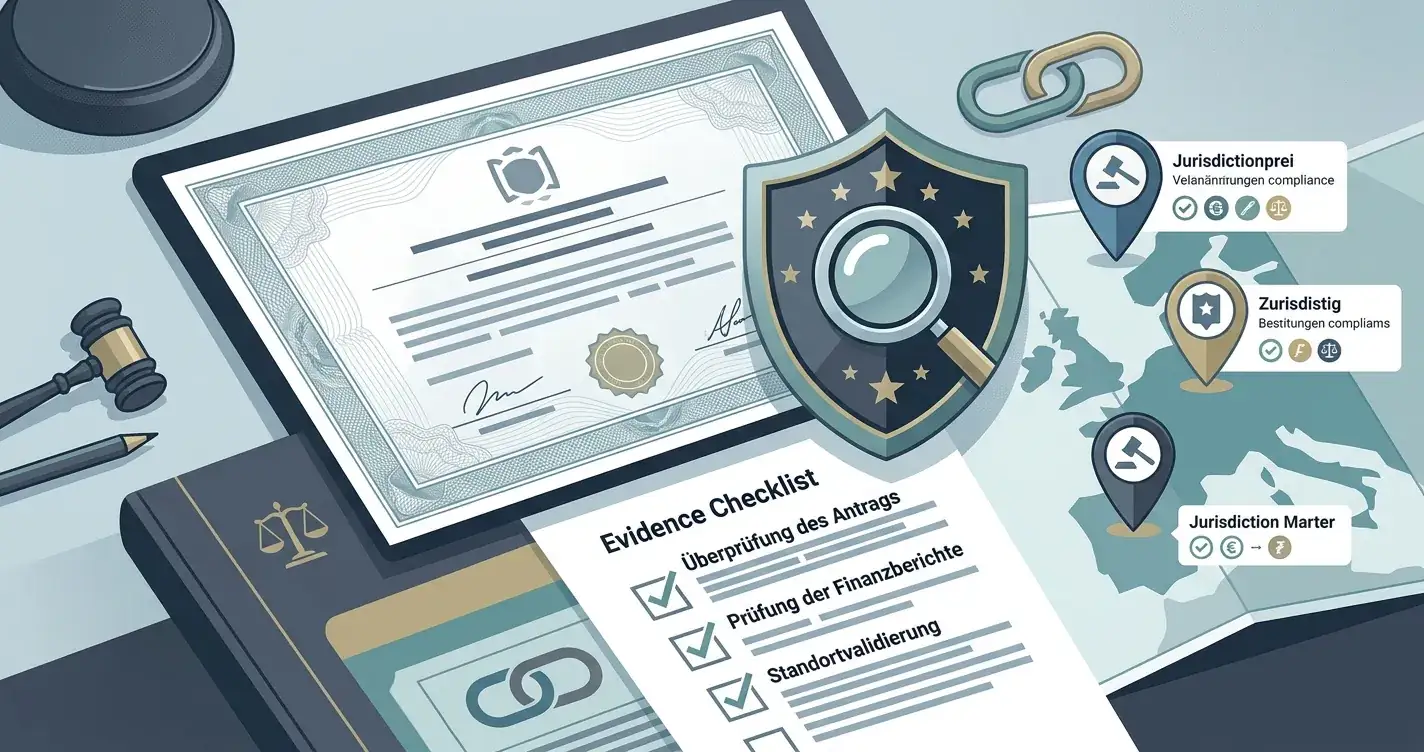
CHEXX trust facts at a glance
| Question | Verified position |
|---|---|
| Who operates CHEXX? | Continent Gaming N.V. |
| Where is the operator incorporated? | Curaçao. |
| What licence is listed? | Curaçao Gaming Authority licence OGL/2024/1332/0669. |
| Current CGA certificate status? | Active as of 23 August 2026. |
| Is CHEXX licensed by Singapore GRA? | No verified Singapore GRA remote-gambling licence. |
| Who does GRA identify as the licensed remote operator? | Singapore Pools. |
| Does CHEXX publish a complaints process? | Yes, including a complaint form and response timelines. |
| Does CHEXX publish responsible-gambling controls? | Yes, including long-term self-exclusion periods. |
Operator identity is independently checkable
The first trust question is not whether a casino looks polished. It is whether the operating entity can be identified and matched across primary records. CHEXX’s terms name Continent Gaming N.V. as the company behind the site. The Curaçao Gaming Authority certificate independently identifies chexx.bet as operated by Continent Gaming N.V., company number 159857.
This matching operator information matters because it reduces ambiguity about who stands behind the service. It does not guarantee a problem-free player experience, and it does not resolve local legality in another country, but it is materially stronger than a site that gives no identifiable legal operator at all.
The broader CHEXX review covers product features. Trust assessment depends on a different set of questions: who operates the site, whether the regulator record can be checked directly, what the licence covers and how those facts interact with Singapore’s separate legal framework.
The Curaçao licence is active
The current Curaçao Gaming Authority certificate states that chexx.bet is operated by Continent Gaming N.V. under licence number OGL/2024/1332/0669. The certificate records the licence as granted on 19 November 2024 and its status as Active as of 23 August 2026.
The regulator record directly supports the statement that CHEXX operates under a Curaçao licence. It is stronger than a copied review-site claim or a marketing badge inferred from a footer because it identifies the operator, domain and licence number in the regulator’s own register.
Licence isolation matters
A Curaçao licence tells you about the operator’s licensing jurisdiction. It does not automatically tell you whether the casino is licensed locally in Singapore, whether every promotion is available to Singapore residents, or whether every account dispute will be resolved in a player’s favour. Those are separate facts and need separate evidence.
What the Curaçao licence does and does not mean
An active CGA certificate establishes that the named operator is licensed in Curaçao to offer games of chance under that jurisdiction’s framework. It also gives readers a regulator and operator identity to verify. CHEXX’s policy documents refer to CGA oversight, complaint reporting and responsible-gambling obligations.
It should not be translated into the stronger claim that CHEXX is locally approved wherever its website can be opened. Licensing is territorial. A licence issued in Curaçao does not become a Singapore GRA licence, and it does not place a Singapore player inside Singapore’s locally licensed remote-gambling framework.
This distinction is especially important in casino reviews because phrases such as “licensed casino” can sound broader than the underlying evidence. The accurate formulation is that CHEXX operates under a Curaçao Gaming Authority licence. The jurisdiction belongs in the sentence.
Singapore status is a separate legal question
Singapore GRA states that it is unlawful to provide unlicensed remote gambling services to persons situated in Singapore and that Singapore Pools is the only operator licensed by GRA to provide remote gambling services. GRA also states that participation in unlicensed remote gambling is an offence for a person in Singapore.
CHEXX therefore should not be described as GRA-licensed, locally authorised or covered by Singapore’s remote-gambling consumer framework. The fact that CHEXX can identify Singapore among countries accepted by its own account system does not override Singapore law. Operator acceptance and local legal authorisation are different dimensions.
For the legal framework in more depth, including what GRA says about unlicensed remote gambling, use the Singapore legal status. The Curaçao licence and Singapore remote-gambling rules should be considered separately rather than treated as interchangeable forms of authorisation.
CHEXX publishes a formal complaints policy
CHEXX’s current Complaints Policy gives registered players a defined path for disputes. It says complaints can cover withdrawals, deposits, bonus terms, account restrictions, balances, KYC, responsible gaming, data protection, AML concerns, licensing and other parts of the player relationship. The policy includes a complaint submission form and identifies [email protected] as a first-level contact.
For ordinary complaints, the policy says CHEXX will acknowledge receipt within seven calendar days and aims to provide a final resolution within four weeks. It allows one extension of up to another four weeks when more time is required, with written notice to the player. Responsible-gaming complaints receive faster handling rules, including written acknowledgment within two days and an extension that should not exceed 14 days unless player cooperation or missing information causes the delay.
These published timelines are useful because they create a benchmark against which a real complaint can be evaluated. A written process does not prove every dispute will end satisfactorily, but it is more actionable than generic promises about support quality.
ADR wording needs a careful reading
The complaints document defines alternative dispute resolution and discusses free escalation to an independent CGA-certified provider. The same document also labels the ADR section “will be available soon” and says CHEXX intends to enter a binding agreement once the CGA publishes its official list of approved ADR entities.
That means the policy supports the existence of an ADR framework in the document, but it should not be rewritten as proof that a named external ADR provider is already operating for every CHEXX dispute today. The useful practical step is to follow the current complaint form and written escalation procedure, then check the current policy for the available external route at the time of a dispute.
Support and responsible-gambling controls add context
CHEXX offers 24/7 live chat and email support according to current operator information and independent coverage. Support availability is not the same as dispute quality, but it gives account holders a route for immediate operational questions before a matter becomes a formal complaint.
The Responsible Gaming Policy also gives a concrete self-exclusion mechanism. CHEXX lists exclusion periods of 1, 3, 5 or 10 years, or lifetime, with support handling the request. During full self-exclusion, gambling activity is blocked, the account is closed and direct marketing is stopped for the exclusion period.
Those controls are genuine policy signals. They should not be used to make a blanket statement that the site is “guaranteed safe” because safety also depends on account handling, transaction disputes, player circumstances and local law.
Security signals are not a substitute for payout evidence
Operator identity, an active licence and published policies are all positive verification points. They answer whether the brand has an identifiable licensed operator and documented procedures. They do not erase the need to examine how withdrawals and account reviews work in practice.
CHEXX’s Terms require identity verification before withdrawal and impose transaction rules that can affect payout processing. Independent reviews and complaint records also contain reports of delayed or frozen withdrawals and account investigations. Those reports are evidence of reputation risk, not automatic proof of misconduct in every case.
The detailed source-by-source analysis belongs on the CHEXX complaints. Keeping those user allegations separate from the licence record prevents subjective review signals from contaminating objective operator facts.
A practical trust checklist for Singapore readers
- Verify the operator: Continent Gaming N.V. is named consistently in CHEXX terms and the CGA certificate.
- Verify the licence: the CGA certificate lists OGL/2024/1332/0669 as Active.
- Keep jurisdiction explicit: Curaçao licensing is not Singapore GRA licensing.
- Read the account rules: KYC and withdrawal conditions matter more than a generic “fast payout” claim.
- Keep records: transaction IDs, wallet addresses, timestamps, saved page records and support messages are useful if a dispute develops.
- Use the formal complaint route: CHEXX publishes a complaint form and response timelines.
- Do not use operator acceptance as legal advice: Singapore’s own GRA rules remain the relevant local framework.
What “legit” can reasonably mean here
If “legit” means “is there a named operator and a regulator record that can be checked?”, CHEXX has those signals. Continent Gaming N.V. is identifiable, and the CGA certificate is active. If “legit” means “is every player protected from disputes or guaranteed a payout without review?”, no licence record can support that promise. If it means “is CHEXX locally licensed for remote gambling in Singapore?”, the answer is no: GRA identifies Singapore Pools as the licensed remote operator.
This three-part framing is more useful than a single yes-or-no label because it preserves the difference between corporate legitimacy, operational reputation and local legal status.
Why a regulator record should be checked directly
Casino review pages can copy licence numbers from one another, and old search snippets can survive after a licence changes status. A direct regulator certificate is more reliable because it ties the domain, operator, company number and licence status together in one current record. The CGA certificate should therefore be checked directly rather than relying on affiliate summaries.
The same principle applies to Singapore. Local status is checked against GRA’s own remote-gambling guidance, not inferred from whether CHEXX accepts a Singapore signup or displays Singapore in an account-country list. Direct regulator evidence keeps availability, licensing and legality from being collapsed into a single misleading label.
CHEXX licensing status from a Singapore perspective
CHEXX has a checkable operator and an active Curaçao Gaming Authority licence. Its policies cover complaints, responsible gambling and account verification, giving users written procedures rather than leaving those areas undefined. Those are meaningful trust signals.
For a Singapore reader, however, the local regulatory conclusion stays separate. CHEXX is not a GRA-licensed Singapore remote-gambling operator, and GRA states that Singapore Pools is the only licensed remote operator and that participation in unlicensed remote gambling is an offence. Treat the Curaçao licence as evidence about CHEXX’s home licensing jurisdiction, not as a substitute for Singapore authorisation.
If the next question is whether signup and account controls match this framework, see the registration guide.
The local framework is explained in Singapore gambling law.